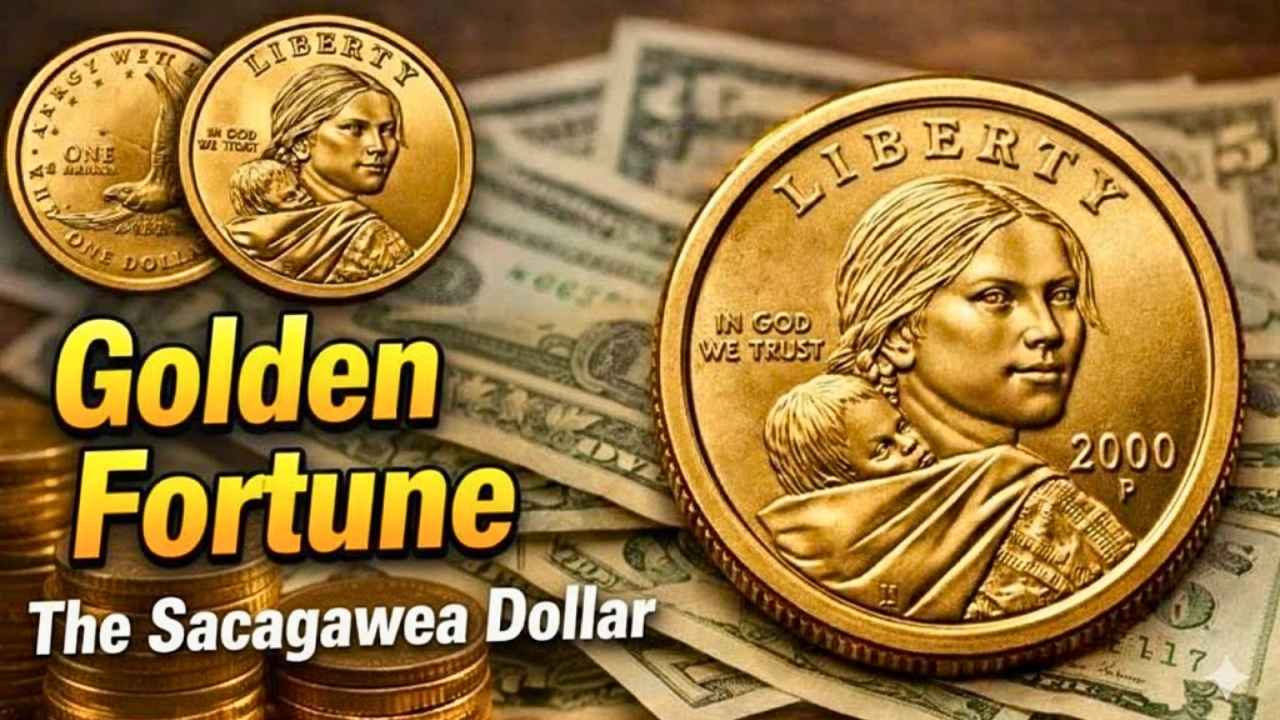
The Sacagawea Dollar, first introduced in 2000, was designed to honor the Shoshone woman who guided the Lewis and Clark expedition. While most of these coins are common and worth only a dollar, certain rare varieties and minting errors have transformed them into treasures worth thousands or even millions. In 2026, collectors continue to chase these rarities, with one extraordinary Sacagawea Dollar reaching a value of $2.1 million. This guide explores the history, identification, and collector insights surrounding this fascinating coin.
The Story of the Sacagawea Dollar
The Sacagawea Dollar was created to replace the Susan B. Anthony Dollar, which had been unpopular due to its similarity in size to the quarter. The new coin featured a golden color, produced by a manganese-brass alloy, and displayed Sacagawea carrying her infant son, Jean Baptiste. The reverse depicted a soaring eagle, symbolizing freedom. Despite its beauty, the coin struggled in circulation, but it quickly became popular among collectors.

Why Some Sacagawea Dollars Are Valuable
Most Sacagawea Dollars are common, but certain varieties stand out due to rarity and unique circumstances. The most famous is the 2000 Sacagawea Dollar struck on a gold planchet and presented to dignitaries, known as the “Cheerios Dollar.” These coins feature a distinctive reverse design with detailed eagle feathers, making them highly collectible. Other rare varieties include coins struck with experimental finishes or those produced in extremely limited numbers.
The $2.1 Million Sacagawea Dollar
The coin that reached $2.1 million is a rare specimen tied to the Cheerios promotion. In 2000, the U.S. Mint partnered with General Mills to distribute Sacagawea Dollars in Cheerios cereal boxes. Some of these coins featured a prototype reverse design with enhanced eagle feather details. Only a handful were produced, making them exceptionally rare. In 2026, one of these coins sold for $2.1 million at auction, cementing its place as one of the most valuable modern U.S. coins.
Other Rare Sacagawea Dollar Varieties
2000 Cheerios Dollar
Features enhanced eagle feather details, extremely rare and highly valuable.
2000‑P Mule Error
A coin struck with the obverse of a Washington quarter and the reverse of a Sacagawea Dollar. Only a few dozen exist, making it one of the most famous modern error coins.

2007‑2009 Native American Series
Special issues with unique reverse designs honoring Native American contributions. Certain proof and error varieties are collectible.
High-Grade Sacagawea Dollars
Even common issues can be valuable if preserved in pristine, uncirculated condition. Coins graded MS67 or higher by professional services can sell for strong premiums.
Chart: Rare Sacagawea Dollar Values in 2026
| Coin Type | Feature | Estimated Value (USD) |
|---|---|---|
| 2000 Cheerios Dollar | Prototype Reverse | $25,000 – $2,100,000+ |
| 2000‑P Mule Error | Quarter Obverse, Dollar Reverse | $50,000 – $200,000+ |
| 2007‑2009 Native American Proofs | Special Reverse Designs | $100 – $1,000+ |
| High-Grade Sacagawea Dollars | MS67+ Condition | $50 – $500+ |
How to Spot Valuable Sacagawea Dollars
Collectors should carefully examine their coins under magnification. The Cheerios Dollar can be identified by its enhanced eagle feather details on the reverse. Mule errors are instantly recognizable by the mismatched obverse and reverse designs. Proof coins with unusual finishes or missing mint marks may also be valuable. Professional grading and authentication are essential to confirm rarity and maximize value.
Collecting Trends in 2026
In 2026, coin collecting remains vibrant, with modern rarities like the Sacagawea Dollar at the center of attention. Auction houses report record prices for Cheerios Dollars and mule errors, while social media has fueled interest among younger collectors. The combination of accessibility in common issues and extreme rarity in special varieties ensures Sacagawea Dollars remain popular across generations.
Tips for Collectors
- Study reference guides to learn about key varieties and errors
- Examine coins carefully for unusual features or minting anomalies
- Consider professional grading to authenticate and preserve rare coins
- Store coins properly to prevent tarnish and damage
- Follow auction trends to understand current market demand
Key Highlights
- The Sacagawea Dollar was introduced in 2000 to honor Sacagawea and replace the Susan B. Anthony Dollar
- Rare varieties include the 2000 Cheerios Dollar and 2000‑P mule error
- One Cheerios Dollar sold for $2.1 million in 2026, making it one of the most valuable modern U.S. coins
- Values range from $50 for high-grade common issues to millions for rare varieties
- Collectors continue to prize these coins for their history, artistry, and rarity
Final Words
The Sacagawea Dollar is more than just currency; it is a symbol of history, artistry, and the excitement of coin collecting. While most examples remain common, rare varieties like the Cheerios Dollar and mule errors have achieved legendary status. In 2026, the sale of a Sacagawea Dollar for $2.1 million proves that hidden fortune can sometimes be found in the most ordinary places. For collectors and enthusiasts alike, the hunt for rare coins is both a passion and an adventure, offering the chance to uncover treasures that connect us to America’s past.