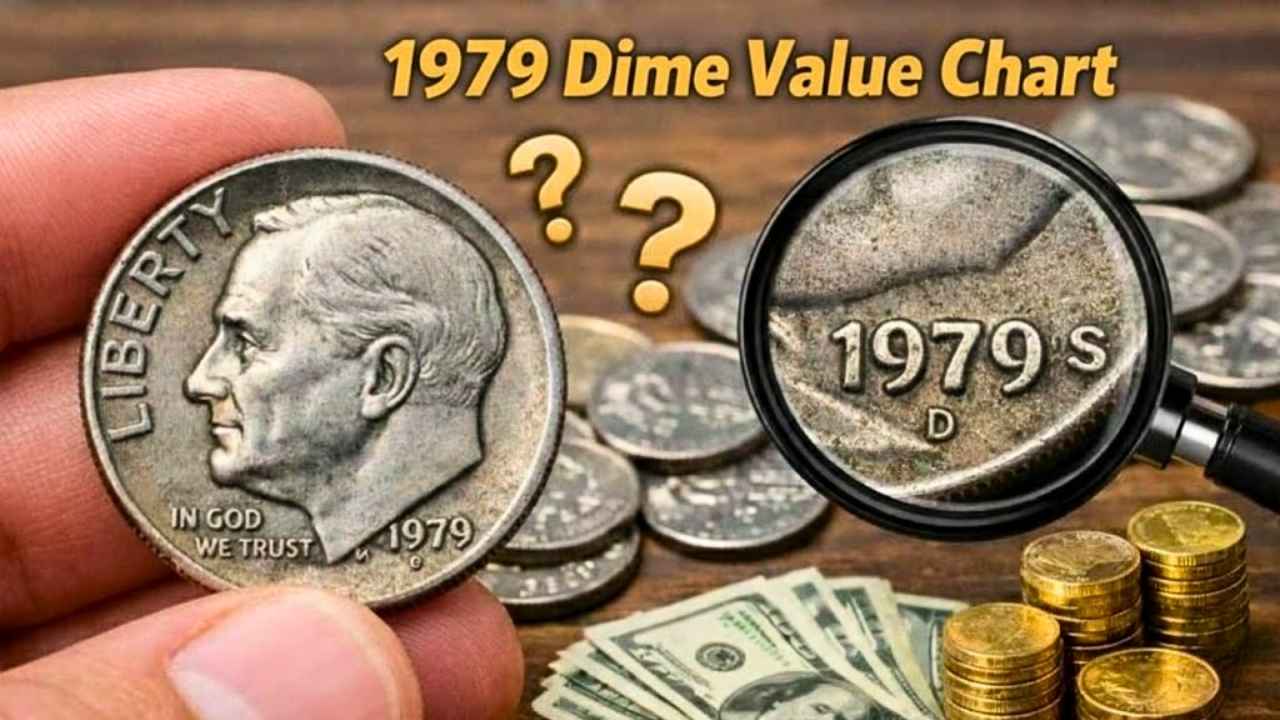
The Roosevelt dime has been a familiar coin in American pockets since 1946, honoring President Franklin D. Roosevelt. By 1979, the series had already been in circulation for more than three decades, but certain coins from this year stand out for their rarity, mint marks, and unusual errors. While most 1979 dimes are worth only ten cents, collectors pay big money for high-grade examples and rare mistakes. This guide explores the history, varieties, and values of the 1979 dime, helping collectors understand what makes these coins special.
The 1979 Roosevelt Dime
The Roosevelt dime was introduced to commemorate President Roosevelt’s leadership and his role in founding the March of Dimes. By 1979, the coin was struck in copper-nickel clad composition, replacing the silver dimes of earlier decades. The obverse features Roosevelt’s portrait, while the reverse shows a torch flanked by an olive branch and an oak branch, symbolizing liberty, peace, and strength.
Mint Marks and Varieties
Three main mint facilities produced dimes in 1979: Philadelphia (no mint mark), Denver (D), and San Francisco (S). Each mint mark carries its own significance and value.
Philadelphia (No Mint Mark)
The Philadelphia Mint produced hundreds of millions of dimes in 1979. Circulated examples are common, but uncirculated coins with sharp details can command premiums.

Denver (D Mint Mark)
The Denver Mint also produced large quantities. High-grade Denver dimes are collectible, especially those with strong strikes and full details.
San Francisco (S Mint Mark Proofs)
Proof coins from San Francisco are highly prized. In 1979, two types of proof coins were struck: Type 1 with a filled “S” mint mark and Type 2 with a clear “S.” Type 2 proofs are scarcer and more valuable.
Rare Errors in 1979 Dimes
Errors add excitement to coin collecting, and 1979 dimes are no exception. Some of the most notable errors include:
Wrong Planchet Errors
A dime struck on a foreign or incorrect planchet can weigh differently and appear unusual. These rare mistakes can be worth thousands.

Off-Center Strikes
Coins struck off-center show part of the design missing. The more dramatic the error, the higher the value.
Double Strikes
A coin struck twice by the press may show overlapping designs. These errors are rare and collectible.
Proof Mint Mark Varieties
The difference between Type 1 and Type 2 proof mint marks makes certain proof dimes especially valuable.
Chart: 1979 Dime Values in 2026
| Variety | Condition | Estimated Value (USD) |
|---|---|---|
| Philadelphia (No Mint Mark) | Circulated | $0.10 – $0.30 |
| Philadelphia (No Mint Mark) | Uncirculated MS65 | $7 – $10 |
| Denver (D Mint Mark) | Uncirculated MS65 | $7 – $10 |
| San Francisco Proof Type 1 | PR-65 | $15 – $25 |
| San Francisco Proof Type 2 | PR-65 | $30 – $50 |
| Full Bands Designation | MS67+ | $100 – $2,650+ |
| Major Errors (Wrong Planchet, Dramatic Strikes) | Various | $1,000 – $8,000+ |
Why Collectors Pay Big Money
Collectors value 1979 dimes for several reasons. High-grade coins with sharp details are rare because most dimes enter circulation quickly and show wear. Proof coins, especially Type 2 varieties, are scarcer and command premiums. Error coins are the most valuable, with dramatic mistakes fetching thousands at auction. The combination of rarity, condition, and historical significance drives collector demand.
How to Spot Valuable 1979 Dimes
Collectors should examine coins carefully under magnification. Look for sharp details in the torch and bands on the reverse, as Full Bands designation adds value. Check mint marks, especially on proof coins, to distinguish between Type 1 and Type 2 varieties. Errors such as off-center strikes or unusual weights may indicate rare planchet mistakes.
Collecting Trends in 2026
In 2026, coin collecting remains strong, with modern rarities like the 1979 dime attracting attention. Online marketplaces and auctions make it easier for collectors to buy and sell coins, while grading services provide authentication and assurance. Social media has fueled interest among younger collectors, ensuring that coins like the 1979 dime remain popular across generations.
Tips for Collectors
- Study reference guides to learn about mint marks and varieties
- Examine coins carefully for sharp details and unusual features
- Consider professional grading for high-value specimens
- Store coins properly to prevent tarnish and damage
- Follow auction trends to understand current market demand
Key Highlights
- The 1979 dime was struck at Philadelphia, Denver, and San Francisco
- Proof coins include two varieties: Type 1 and Type 2 mint marks
- Values range from face value for circulated coins to $8,000+ for rare errors
- Full Bands designation adds significant premiums to high-grade coins
- Collectors continue to prize 1979 dimes for rarity, condition, and errors
Final Words
The 1979 Roosevelt dime may seem ordinary at first glance, but hidden treasures lie within its varieties and errors. From proof coins with rare mint marks to dramatic mistakes worth thousands, this coin proves that even modern issues can hold significant value. In 2026, collectors continue to pay big money for the finest examples, making the 1979 dime a fascinating piece of numismatic history. Whether you are a seasoned collector or just starting out, searching for these rarities offers both excitement and the possibility of hidden fortune in everyday change.